
The sheer volume of transactions across public ledgers—from Bitcoin's genesis to Ethereum's billion-plus operations and the rapid growth of Solana and other chains—presents a goldmine for insights, if you know how to dig. Blockchain data analytics is the disciplined practice of extracting meaningful intelligence from these decentralized, append-only records, transforming raw transaction logs into actionable insights for diverse applications, from market behavior to crime fighting. It's a blend of forensic accounting, behavioral science, and infrastructure monitoring applied to a new frontier.
At a Glance

- What it is: Blockchain data analytics decodes raw ledger data to reveal user behavior, asset flows, and potential illicit activity.
- Key Challenges: Tackling petabyte-scale data, low signal-to-noise ratios, the absence of rigid schemas, and the complexity of cross-chain interactions.
- The 10-Step Framework: A robust, iterative process for defining goals, accessing, cleaning, analyzing, and visualizing blockchain data.
- Real-Time Imperative: Critical for dynamic use cases like NFT markets, DeFi monitoring, and compliance systems.
- Advanced Techniques: Includes cross-chain analysis, DeFi liquidity tracking, NFT market trend identification, and address clustering.
- Essential Tools: Leverage purpose-built platforms, data lakehouses, and strong SQL skills.
The Foundation: Unpacking Decentralized Records
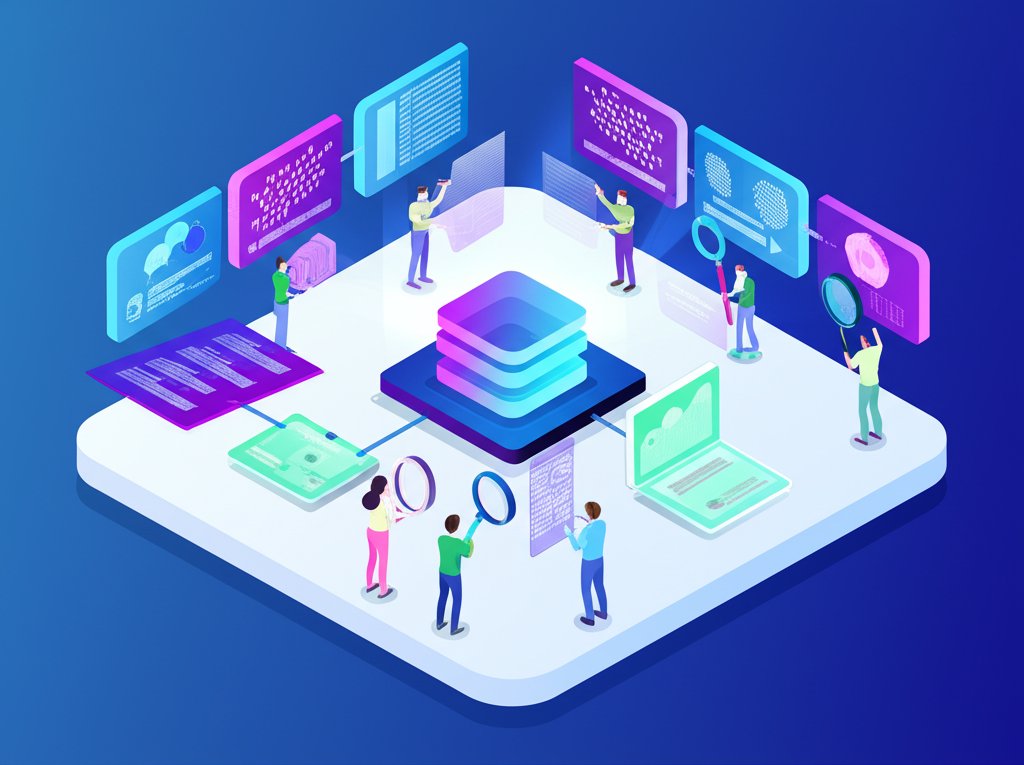
Every blockchain acts as a public, immutable ledger, meticulously recording every transaction, smart contract invocation, and wallet interaction. Whether it's Bitcoin, Ethereum, Solana, or any other chain, this data is transparent by design. However, transparency doesn't equate to immediate understanding. The data is inherently chaotic, largely unlabelled, and pseudonymous, creating a significant barrier to direct interpretation.
The goal of blockchain data analytics is to cut through this noise. Analysts aim to detect fraud patterns, trace the movement of illicit assets, understand user behavior in emerging ecosystems like NFTs and DeFi, and build predictive machine learning models. This isn't about gaining access to hidden data; it's about making sense of what's already publicly available but obfuscated by its raw, decentralized nature.
Navigating the Uncharted Waters: Core Challenges in Blockchain Data Analytics
Extracting value from blockchain data isn't trivial. The unique architecture of decentralized ledgers introduces several formidable challenges that distinguish it from traditional data analysis:
- Massive Data Volume: Chains like Ethereum have processed over a billion transactions, accumulating petabytes of historical data. Querying and processing this scale requires immense computational resources and efficient data architectures.
- Low Signal-to-Noise Ratio: A vast number of transactions are background activities, automated bot operations, or simple transfers that obscure meaningful patterns. Sifting through this "noise" to find genuine signals, such as a major fund movement or a coordinated attack, is a constant battle.
- Lack of Native Schema: Unlike relational databases, blockchain data often comes in raw, unstructured formats (like hexadecimal strings for smart contract logs). There's no pre-defined schema to simply query; data must be decoded, parsed, and structured before it can be analyzed.
- Pseudonymity and Labeling: While transactions are public, the identities behind the wallet addresses are not. Analysts must employ sophisticated techniques like address clustering and external labeling to attribute activity to known entities or groups.
- Cross-Chain Complexity: As the ecosystem expands, assets and activity increasingly flow across different blockchains via bridges and swaps. Tracing these movements requires normalizing data from disparate chains, which often have different structures, transaction types, and consensus mechanisms.
- Real-Time Demands: For applications like market arbitrage detection, compliance monitoring, or immediate fraud alerts, analysis needs to happen with ultra-low latency, often requiring direct queries on massive datasets that update continuously.
These hurdles necessitate robust data engineering, advanced modeling techniques, and specialized toolsets to effectively transform raw blockchain data into actionable intelligence.
Your Playbook for Effective Blockchain Data Analytics
Embarking on a blockchain data analytics project requires a systematic approach. Here's a 10-step framework to guide your efforts, designed to move from vague questions to concrete, actionable insights. For a broader context on how this analysis illuminates various aspects of the crypto market, including criminal operations, you might find value in our comprehensive guide on Illuminating crypto market & crime.
1. Define Analytical Goals with Precision
Start by formulating specific, operational questions. Avoid broad queries like "understand the market." Instead, ask:
- Behavioral: "How has the average transaction size for NFT sales on OpenSea changed post-Merge?"
- Investigative: "Where did the funds from the recent DeFi exploit ultimately flow?"
- Operational: "What's the real-time transaction volume and average gas fee on Polygon in the last hour?"
Clear objectives save computational costs and focus your data engineering efforts.
2. Scope Your Analysis Deliberately
Once you have your goal, narrow down the parameters.
- Blockchain(s): Bitcoin, Ethereum, Solana, specific Layer 2s, etc.
- Timeframe: A specific range (e.g., Q3 2023), real-time streaming, or historical archives.
- Event Types: Are you looking at simple ERC-20 transfers, NFT mints, DeFi swaps, or smart contract calls? Specifying these limits the data you need to ingest and process.
3. Choose Your Data Access Method Wisely
Your data access strategy depends on your scale and fidelity requirements.
- Public APIs (e.g., Etherscan, Alchemy): Excellent for prototyping, quick queries, and smaller datasets. They offer convenience but might have rate limits or lack granular raw data.
- Running Your Own Node: Provides high-fidelity, raw blockchain data directly from the source. This is resource-intensive to maintain but offers ultimate control and comprehensive data.
- Building a Lakehouse Architecture: For serious scale and diverse workloads, combine storage (e.g., S3 with Apache Iceberg) with powerful query engines (e.g., StarRocks). This offers flexibility for both batch and real-time processing of petabytes.
4. Cleanse and Structure Raw Data
Blockchain data is messy. This step is crucial for usability.
- Decode Logs: Smart contract events often produce hexadecimal logs. These need to be decoded into human-readable parameters.
- Flatten Nested Fields: Raw data can have complex, nested JSON structures. Flattening these makes querying much simpler.
- Normalize Addresses and Timestamps: Ensure addresses are in a consistent format (e.g., checksummed Ethereum addresses) and timestamps are standardized (e.g., UTC Unix epoch).
- Enrich with External Labels: Attach known entity labels (e.g., "Binance Hot Wallet," "Tornado Cash") to addresses. This is vital for attributing activity and often comes from external intelligence providers.
5. Design Your Analytics Stack
A robust stack is key for scalable and reliable analysis.
- Ingestion: Use streaming platforms like Kafka or batch processing tools like Apache Spark to bring data in.
- Storage: Data lake formats like Apache Iceberg on cloud object storage (e.g., AWS S3) provide open, flexible, and scalable storage with schema evolution capabilities.
- Query Engine: High-performance engines like StarRocks are designed for low-latency queries on massive datasets, ideal for real-time dashboards. Other options include Trino or dedicated data warehouses.
- ETL (Extract, Transform, Load): Tools like PySpark or dbt (data build tool) manage transformations and orchestrate data pipelines.
- Business Intelligence (BI): Dashboards and visualization tools like Superset or Grafana present insights.
6. Initiate the Analysis
With clean, structured data and a functioning stack, you can now apply analytical techniques.
- Graph Tracing: Map relationships between addresses and transactions to follow fund flows or identify connected entities.
- Clustering: Group similar activities or addresses (e.g., identifying wallets likely controlled by the same entity).
- Time-Series Rollups: Aggregate metrics over time (e.g., daily transaction volume, weekly active users) to identify trends.
- SQL Queries: Many platforms leverage SQL (
SELECT,WHERE,GROUP BY,JOIN) as the primary interface for data exploration.
7. Optimize for Performance
Blockchain data grows relentlessly, so performance is critical.
- Data Partitioning: Organize data storage by block time or date. This allows query engines to scan only relevant subsets of data, significantly speeding up queries.
- Pre-Aggregation: For frequently requested metrics (e.g., daily total volume), pre-calculate and store them to avoid recomputing every time.
- Materialized Views and Caching: Use automated materialized views (pre-computed result sets) and caching layers to accelerate common queries, especially for dashboards.
8. Visualize Your Insights
Raw data or query results aren't enough. Effective visualization tells a story.
- Dashboards: Create interactive dashboards that display key metrics and trends.
- Human-Readable Labels: Use clear labels and descriptions for charts and graphs.
- Highlight Movements and Deviations: Focus on changes over time, anomalies, or specific patterns identified during analysis.
- Contextualize: Provide context for spikes or drops; what real-world events might correlate with the observed data?
9. Build Real-Time Alerting
For critical use cases like compliance or fraud detection, latency is the enemy.
- Streaming Ingestion: Implement pipelines that continuously ingest new block data.
- Rapidly Updated Materialized Views: Leverage query engines that can refresh materialized views near-instantly.
- Rule-Based Alerts: Configure alerts that trigger when specific conditions are met (e.g., large transfer to a blacklisted address, sudden unusual activity).
10. Treat Your Pipeline Like Software
Your analytics pipeline is a complex system that requires the same rigor as any software project.
- Version Control: Manage all code (ETL scripts, SQL queries, dashboard definitions) in a version control system like Git.
- Testing: Implement unit and integration tests for your data pipelines and transformations to ensure accuracy and reliability.
- Observability: Monitor your pipeline's health, data quality, and query performance. Log errors and performance bottlenecks.
- Auditability: Maintain clear documentation and logs so that data lineage can be traced and analytical results can be reproduced.
Real-World Application: TRM Labs' Lakehouse Architecture
Leading blockchain intelligence providers demonstrate the power of well-designed analytics stacks. TRM Labs, for instance, analyzes petabytes of data across more than 30 blockchains, serving hundreds of customer queries per minute. Their solution hinges on a modern lakehouse architecture:
- Storage: Apache Iceberg on Amazon S3. Iceberg was chosen for its schema evolution capabilities, allowing them to adapt to constantly changing blockchain data schemas without costly data migrations, and its open format provides flexibility.
- Query Engine: StarRocks. TRM Labs' benchmarks showed StarRocks outperforming alternatives like Trino and DuckDB. It delivered superior performance for sub-second latency queries, handled high concurrency, and offered automatic materialized views, significantly simplifying their ETL processes.
This architecture enables TRM Labs to avoid data duplication, streamline data transformations, and serve both internal investigative dashboards and external customer-facing products with real-time insights from a single, unified backend. It's a testament to how robust data engineering underpins advanced blockchain analytics.
Beyond the Basics: Advanced Blockchain Data Analytics Topics
Once you've mastered the fundamentals, advanced techniques allow for deeper, more nuanced insights.
Cross-Chain Analytics
Tracking assets and user behavior as they move across different blockchain networks is increasingly vital. This involves:
- Schema Normalization: Using adaptable data lake formats like Apache Iceberg to normalize disparate data schemas from various chains into a unified structure.
- Robust JOIN Operations: Employing powerful query engines capable of performing complex JOINs across these normalized datasets to accurately trace funds through bridges, cross-chain swaps, and multi-chain protocols. This can reveal the full journey of an asset, even if it traverses multiple networks.
DeFi Liquidity Monitoring
Decentralized Finance (DeFi) protocols are highly dynamic. Analyzing them requires:
- Event Tracking: Monitoring specific smart contract events like
Mint(for liquidity provisioning),Burn(for liquidity removal), andSwap(for trading activity) from decentralized exchanges (DEXs) and lending protocols. - User Behavior Clustering: Grouping addresses based on their DeFi interactions (e.g., frequent traders, liquidity providers, yield farmers) to understand market segments.
- Off-Chain Integration: Combining on-chain data with off-chain price feeds to calculate crucial metrics like impermanent loss, annual percentage rates (APR), and total value locked (TVL).
NFT Market Trends
The NFT space presents unique analytical opportunities and challenges:
- Marketplace Event Analysis: Tracking events from major NFT marketplaces like OpenSea (listings, sales, bids, transfers).
- Metadata Integration: Combining on-chain transaction data with off-chain metadata (e.g., rarity traits, collection attributes) to enrich analysis.
- Graph Analysis for Patterns: Using network analysis to identify suspicious patterns like "wash trading" (where an individual sells an NFT to themselves to inflate prices) or to understand whale concentration and influence within specific collections.
Key Methodologies and Tools for Blockchain Data Analysts
Effective blockchain data analytics relies on specific methodologies and a growing ecosystem of tools.
Address Clustering
This fundamental technique groups multiple blockchain addresses likely controlled by the same entity. It uses various heuristics:
- Co-spend Analysis: If two or more input addresses are used in the same transaction, they are typically assumed to be controlled by the same wallet or entity.
- Change Addresses: Identifying unused addresses that receive leftover funds from a transaction, often returning to the same originating entity.
- Deposit Addresses: Linking unique deposit addresses on centralized exchanges back to the exchange's main hot wallet.
This process helps move from pseudonymous addresses to identified entities, dramatically increasing the signal-to-noise ratio for investigations.
Network Analysis (Graph Theory)
Blockchain data naturally forms a graph: addresses are nodes, and transactions are directed edges.
- Relationship Mapping: Visualizing these connections helps uncover complex relationships between addresses and entities.
- Identifying Influential Entities: Spotting addresses with high transaction volumes or many connections (often exchanges, major protocols, or influential traders).
- Fund Flow Tracing: Following the path of specific funds through a network of transactions, crucial for illicit finance investigations.
Popular Tools for Blockchain Data Analysis
While building a custom lakehouse offers ultimate control, many powerful platforms and tools assist in analysis:
- Google BigQuery: Offers public datasets for Bitcoin and Ethereum, allowing SQL queries on petabytes of historical data.
- Dune Analytics: A popular web-based platform with a vast library of community-contributed dashboards and the ability to write custom SQL queries on various chains.
- The Graph: An indexing protocol for querying blockchain data efficiently, often used by dApps but also valuable for analysts.
- Nansen: An analytics platform known for its extensive labeling of addresses and advanced insights into on-chain behavior, particularly for DeFi and NFTs.
- Ethereum ETL: An open-source project to export Ethereum blockchain data (blocks, transactions, receipts, logs, tokens, traces) into relational databases or cloud data warehouses.
Crucially, strong SQL skills are fundamental for interacting with almost all these platforms and building effective queries. UnderstandingSELECT,WHERE,GROUP BY, andJOINstatements is your entry ticket to unlocking blockchain data.
Quick Answers: Your Blockchain Data Analytics FAQ
Is blockchain data analysis truly real-time?
Achieving true real-time analysis (sub-second latency for continuous data streams) is challenging but increasingly possible with modern data architectures. It requires streaming ingestion, highly optimized query engines, and fast-refreshing materialized views. For many use cases, near real-time (minutes) is sufficient and more achievable.
How do you handle privacy concerns with public data?
While transactions are public, identities are pseudonymous. Analysts focus on identifying patterns and entities responsible for activity, not individual users' personal data. Techniques like address clustering and entity labeling aim to attribute activity to known organizations or groups, often without revealing individual identities unless legally mandated.
What's the biggest misconception about analyzing blockchain data?
A common misconception is that because the data is "public," it's easy to understand. In reality, the pseudonymous nature, lack of schema, and sheer volume make it incredibly complex. It requires specialized tools and expertise to decode and interpret effectively.
What skills are most crucial for a blockchain data analyst?
A strong foundation in SQL is paramount. Beyond that, skills in data engineering (ETL, pipeline design), programming (Python for scripting and data manipulation), statistical analysis, graph theory, and familiarity with cloud data platforms are essential. A deep understanding of blockchain fundamentals and crypto economics is also highly valuable.
Taking the Next Step: Your Data-Driven Blockchain Journey
The world of blockchain data analytics is dynamic, challenging, and filled with untapped potential. From dissecting market trends to unmasking illicit operations, the ability to derive meaningful insights from public ledgers is becoming an indispensable skill.
Start by clearly defining your analytical objectives, then iteratively build out your data pipeline. Don't shy away from investing in robust data engineering and adopting a modern lakehouse approach if scale and real-time capabilities are critical. Embrace the complexity, leverage the growing ecosystem of tools, and continuously refine your methodologies. The payoff, in terms of deeper understanding and actionable intelligence, is immense. Your journey into data-driven blockchain insights begins now.