The business world is constantly searching for ways to fortify its operations, enhance efficiency, and pioneer new opportunities. In this relentless pursuit, enterprise blockchain has emerged as a transformative technology, delivering distinct enterprise blockchain benefits that are reshaping industries from finance to supply chain. It's not just a buzzword; it's a foundational shift for how organizations conduct business securely, transparently, and with unprecedented agility.
If you’re looking to understand how this powerful technology can unlock new levels of trust and performance for your organization, you’re in the right place. We'll cut through the noise and show you exactly why businesses are making enterprise blockchain a cornerstone of their digital strategy.
At a Glance: Key Enterprise Blockchain Benefits
- Enhanced Security: Cryptographically protected, immutable records drastically reduce fraud and cyber risks.
- Unrivaled Transparency & Traceability: Gain real-time, end-to-end visibility across complex operations like supply chains.
- Boosted Efficiency: Automate processes with smart contracts and eliminate costly intermediaries, accelerating transactions.
- Simplified Compliance: Immutable audit trails make regulatory reporting and adherence significantly easier.
- Stronger Collaboration: Foster trust and share data securely across a network of partners and stakeholders.
- New Business Models: Enable asset tokenization and innovative service offerings, driving competitive advantage.
- Scalability & Performance: Designed to handle enterprise-level transaction volumes with tailored governance.
Beyond the Hype: Understanding Enterprise Blockchain
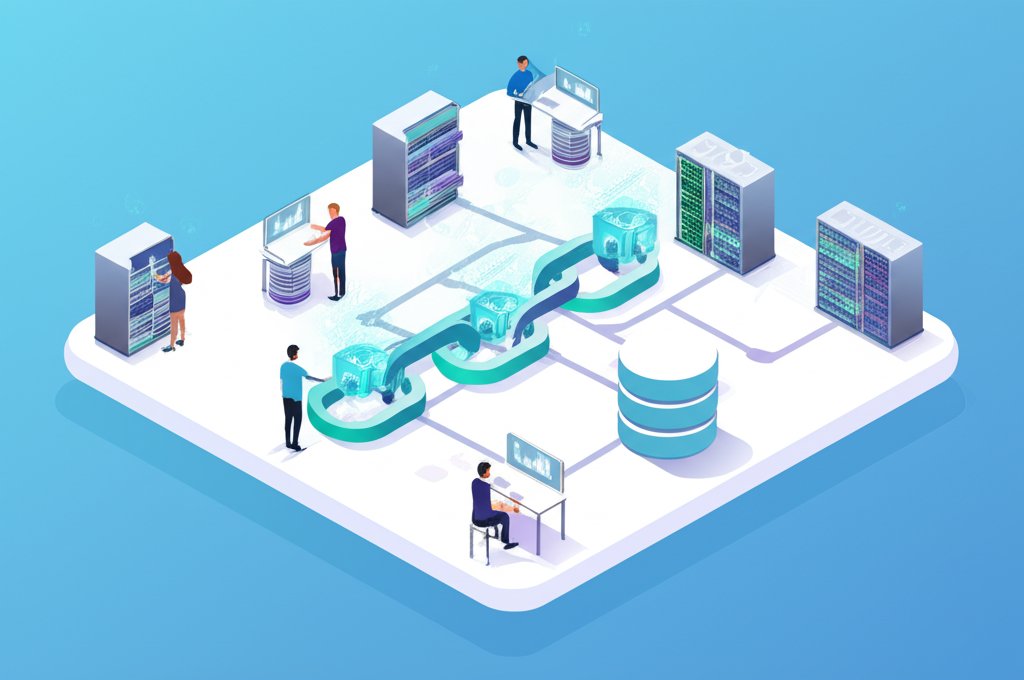
Before diving into the benefits, let's quickly clarify what we mean by "enterprise blockchain." Unlike public, permissionless blockchains like Bitcoin or Ethereum, enterprise blockchain operates on a permissioned network. This means participants are known and authorized, creating a controlled environment ideal for business operations. You might hear it referred to as a private or consortium blockchain, where a single organization or a group of organizations governs the network.
This model allows for secure collaboration, streamlined workflows, and impeccable data integrity, all while delivering faster transactions and better scalability than its public counterparts. Think of leading platforms like Hyperledger Fabric, R3 Corda, and Quorum – these are the backbone of many enterprise-grade solutions.
The fundamental shift here is from fragmented, siloed data systems to a shared, immutable ledger. It’s a distributed ledger technology (DLT) designed specifically for business needs, offering a level of trust and automation that traditional systems simply can't match. When organizations explore what are Blockchain Enterprise Systems, they're often looking for this specific blend of control, efficiency, and security.
The Core Promise: Unpacking Enterprise Blockchain Benefits
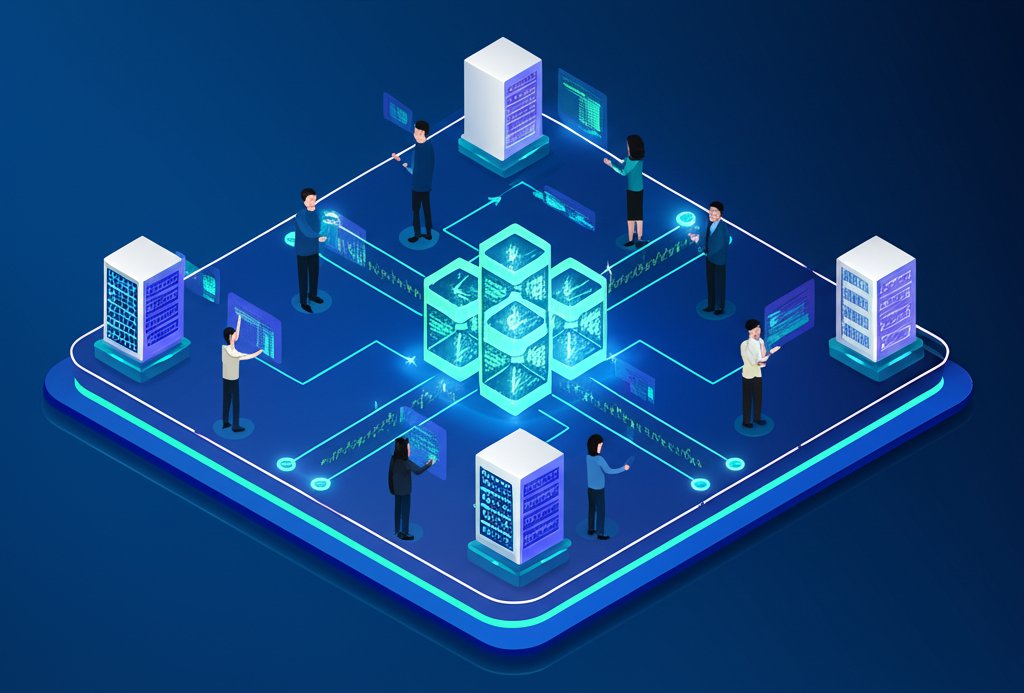
The strategic adoption of enterprise blockchain isn't merely about incremental improvements; it's about fundamental transformation. Let's break down the major advantages that make it a game-changer.
Bulletproof Security & Unwavering Data Integrity
In an era riddled with cyber threats and data breaches, robust security is non-negotiable. Enterprise blockchain delivers on this front with a multi-layered approach:
- Cryptographic Encryption: Every transaction is secured using advanced cryptography, making it incredibly difficult for unauthorized parties to tamper with data.
- Decentralized Architecture: By distributing data across multiple nodes, enterprise blockchains eliminate single points of failure. This significantly reduces the risk of fraud, cyberattacks, and system outages, as no single entity controls the entire network. If one node goes down, the network continues to operate seamlessly.
- Immutability: Once a transaction is recorded on the blockchain, it cannot be altered or deleted. This "write-once, append-only" nature creates an unchangeable, verifiable audit trail that instills profound trust in the data's integrity.
Imagine knowing with absolute certainty that the data you're relying on, whether it's a financial record or a product's origin, hasn't been tampered with. This level of data integrity is paramount for industries where trust and verification are critical.
Real-time Transparency & End-to-End Traceability
Visibility is power, especially in complex global operations. Enterprise blockchain provides unprecedented transparency and traceability:
- Supply Chain Management: Track goods from their origin to the consumer in real-time. This means knowing exactly where a product is, who handled it, and under what conditions. For instance, Walmart uses blockchain to trace food products back to their source in seconds, rather than days, drastically improving food safety.
- Compliance & Regulatory Adherence: The immutable ledger creates a clear, chronological record of all activities, making it far easier to demonstrate compliance with industry regulations and internal policies.
- Quality Control & Authenticity: Verify the authenticity of products, combat counterfeiting, and quickly identify the source of quality issues. This builds consumer confidence and protects brand reputation.
This level of insight empowers businesses to identify bottlenecks, react swiftly to issues, and provide verifiable proof of provenance and process adherence.
Turbocharged Efficiency & Cost Savings
Traditional business processes often involve numerous intermediaries, manual reconciliation, and redundant record-keeping. Enterprise blockchain slashes through this inefficiency:
- Elimination of Intermediaries: By providing a shared, trusted ledger, blockchain can remove the need for third-party verifiers in many transactions, reducing fees and speeding up processes.
- Automated Reconciliation: The shared, synchronized ledger means all parties are working from a single source of truth. This dramatically reduces the time and cost associated with reconciling disparate records and correcting errors.
- Faster Transactions: With fewer manual steps and intermediaries, transactions—especially cross-border payments—can settle significantly faster, often in near real-time, compared to traditional multi-day processes.
- Reduced Operational Costs: Lower administrative overheads, fewer disputes, and optimized resource allocation all contribute to substantial cost savings.
Smarter Operations with Smart Contracts
Perhaps one of the most exciting aspects of enterprise blockchain is the integration of smart contracts. These are self-executing programs stored directly on the blockchain:
- Automated Agreements: Smart contracts automatically execute predefined terms and conditions when certain criteria are met. For example, a payment could be released automatically once goods are verified as delivered, or insurance claims settled once sensor data confirms an event.
- Reduced Manual Intervention: This automation removes the need for manual oversight, reducing human error, accelerating processes, and freeing up resources for more strategic tasks.
- Enforceable Logic: Because smart contracts run on an immutable blockchain, their execution is transparent, verifiable, and irreversible, ensuring all parties adhere to the agreed-upon rules without external enforcement.
The ability to embed business logic directly into the transaction layer revolutionizes how agreements are made and executed.
Streamlined Compliance & Auditability
Regulatory burdens are a constant challenge for businesses. Enterprise blockchain offers a powerful solution:
- Immutable Audit Trails: Every transaction leaves an indelible, timestamped mark on the ledger. This creates a comprehensive and tamper-proof audit trail that can be easily accessed and verified by auditors and regulators.
- Automated Reporting: With transparent records and smart contracts, generating compliance reports can become a more automated, less burdensome process.
- Enhanced Trust for Regulators: The verifiable nature of blockchain data provides regulators with greater confidence in the integrity of reported information, potentially simplifying regulatory oversight.
This makes meeting compliance requirements, such as KYC (Know Your Customer) or AML (Anti-Money Laundering), more efficient and reliable.
Forging Stronger Partnerships Through Collaboration
Businesses rarely operate in isolation. Supply chains, joint ventures, and partnerships require seamless data exchange and mutual trust. Enterprise blockchain fosters this:
- Shared Source of Truth: All authorized participants in a network operate from the same, constantly updated ledger. This eliminates data silos and ensures everyone is working with consistent information.
- Enhanced Trust: The transparency and immutability of the blockchain build inherent trust among partners, reducing the need for costly and time-consuming reconciliation processes.
- Secure Data Exchange: Sensitive business data can be shared securely and selectively, with customizable privacy settings ensuring only authorized parties can access specific information. This is particularly crucial in consortium blockchains where multiple competitors might collaborate on a shared platform.
This shared infrastructure can transform adversarial relationships into genuinely collaborative ecosystems.
Unlocking New Business Models & Competitive Edge
Beyond operational improvements, enterprise blockchain opens doors to entirely new ways of doing business:
- Asset Tokenization: Representing real-world assets (e.g., real estate, art, commodities) as digital tokens on a blockchain. This can fractionalize ownership, increase liquidity, and make assets more accessible to a broader range of investors.
- Data Monetization: Securely share and monetize data in new ways, creating marketplaces for authenticated and verified information.
- Innovative Service Offerings: Develop novel services based on verifiable data and automated processes, creating competitive differentiation.
- Decentralized Finance (DeFi) for Enterprises: While distinct from public DeFi, enterprise blockchain can enable more efficient and transparent financial instruments and services within permissioned networks.
Companies that embrace these innovations early will gain a significant competitive advantage in their respective markets.
Sustainability & Ethical Operations
In an increasingly conscious world, businesses are under pressure to demonstrate their commitment to environmental and social responsibility. Enterprise blockchain can help:
- Resource Tracking: Trace the origin and lifecycle of materials and products to verify sustainable sourcing and reduce waste. For example, tracking conflict minerals or ethically sourced coffee.
- Carbon Footprint Monitoring: Provide transparent, verifiable records of carbon emissions and offsets, supporting corporate sustainability goals.
- Reduced Paper Usage: Digitizing records and processes on a blockchain can significantly reduce reliance on paper documentation.
This enables businesses to not only meet ethical demands but also to prove their efforts through verifiable data.
Real-World Impact: Enterprise Blockchain in Action
The adoption of enterprise blockchain isn't theoretical; it's happening across diverse sectors:
- Cross-Border Payments: Platforms like RippleNet facilitate near real-time, low-cost international payments for financial institutions, sidestepping traditional correspondent banking networks.
- Healthcare: Blockchain is used to create secure, interoperable patient records, allowing authorized medical professionals to share data seamlessly while maintaining privacy, improving diagnosis and treatment.
- Retail & Luxury Goods: Companies are using blockchain to authenticate products and combat counterfeiting. For instance, tracking luxury items or pharmaceuticals to ensure their legitimacy.
- Logistics & Shipping: From tracking fresh produce to shipping containers across oceans, blockchain provides real-time visibility and verifies custody, drastically reducing delays and improving accountability.
- Legal & Notarization: Digital notarization of documents, intellectual property rights management, and secure legal record-keeping are becoming more efficient and trustworthy.
The market reflects this growing adoption, valued at approximately $9.64 billion in 2023 and projected to soar to $145.9 billion by 2030, with a staggering compound annual growth rate (CAGR) of 47.4%. North America is currently leading this technological charge.
Navigating the Journey: Considerations for Adoption
While the benefits are compelling, adopting enterprise blockchain isn't without its considerations. Companies exploring this path need to address:
- Scalability & Interoperability: Ensuring the chosen platform can handle the required transaction volumes and integrate smoothly with existing ERP, CRM, and legacy systems is paramount. Organizations like the Enterprise Ethereum Alliance are working on standards to improve interoperability.
- Legal & Regulatory Compliance: The evolving legal landscape around blockchain, data privacy (e.g., GDPR), and digital assets requires careful navigation. Consulting legal experts familiar with DLT is crucial.
- Robust Security & Privacy: While inherently secure, proper implementation, governance, and access controls are essential. Privacy features, such as zero-knowledge proofs, might be needed for highly sensitive data.
- Ecosystem Development: Successful enterprise blockchain often requires multiple participants. Building a consortium or convincing partners to join a network is a significant undertaking.
- Talent & Expertise: Developing and maintaining blockchain solutions requires specialized skills that may be in short supply. Investing in training or external expertise is often necessary.
Historically, blockchain evolved from cryptographic foundations in the 1970s (Merkle trees), gained public prominence with Bitcoin in 2008, expanded with Ethereum's smart contracts, and now, in its "third generation," focuses heavily on enterprise scalability and specific business requirements. Understanding this evolution helps appreciate the current robust state of enterprise-grade solutions.
Your Next Move: Getting Started with Enterprise Blockchain
The question for forward-thinking businesses isn't if enterprise blockchain will impact their industry, but when and how. The benefits are clear: unparalleled security, verifiable trust, streamlined operations, and the potential for groundbreaking innovation.
If you're considering integrating this technology, start by identifying a specific business problem that blockchain is uniquely positioned to solve. Don't chase the technology for its own sake. Look for areas plagued by:
- Lack of trust among participants.
- Inefficient manual processes requiring multiple intermediaries.
- Challenges with data integrity or traceability.
- High costs associated with reconciliation or fraud.
Once you pinpoint a compelling use case, consider partnering with an experienced blockchain solutions provider. Pilot projects are an excellent way to test the waters, understand the implications, and demonstrate value before a wider rollout. The journey may be complex, but the enduring enterprise blockchain benefits of enhanced security, efficiency, and innovation are well worth the investment, positioning your business at the forefront of the digital economy.