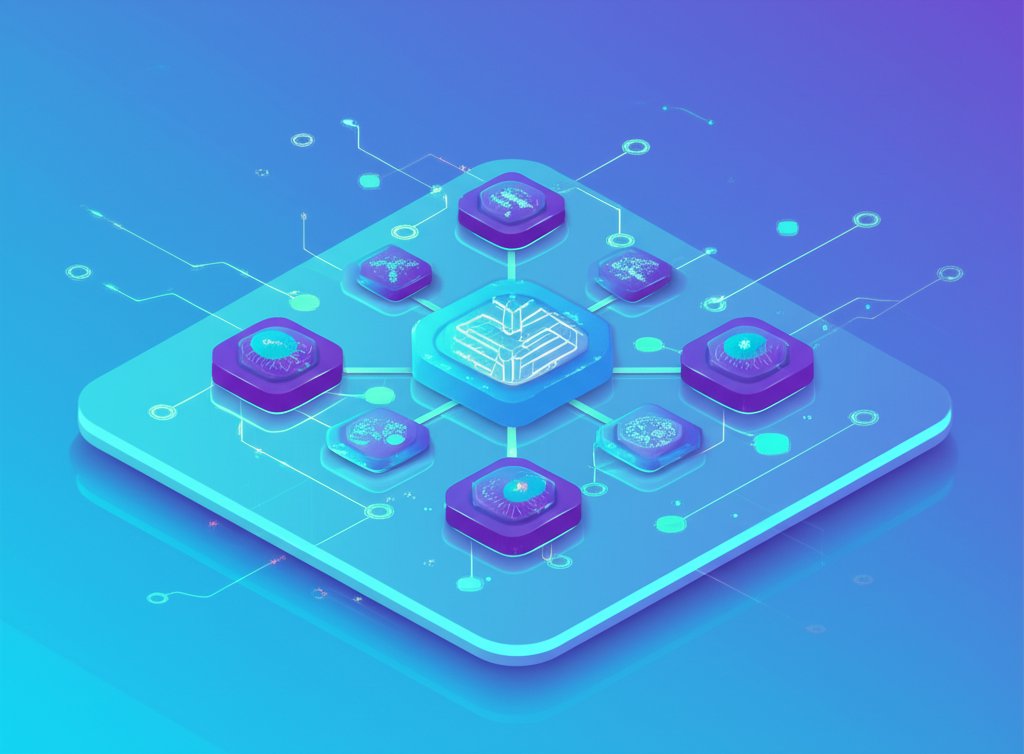
Step into the world of decentralized technology, and one of the first questions you might ask is, "How many blockchains are there, exactly?" It’s a great question, and the answer is far from static. As of 2024, the blockchain landscape has exploded, evolving from a niche concept to a sprawling ecosystem with well over 1,000 different blockchains in active use.
This isn't just about Bitcoin and Ethereum anymore. We're talking about a diverse, dynamic network of digital ledgers, each with unique features, purposes, and communities. Understanding this breadth is key to grasping the true potential – and challenges – of the decentralized future.
At a Glance: Key Takeaways
- Over 1,000 Blockchains: The number of active blockchains has surged past 1,000 in 2024, reflecting rapid innovation and adoption.
- Decentralized Digital Ledgers: At its core, a blockchain is a secure, unchangeable record of transactions, maintained by many computers, without a central authority.
- Diverse Types: Blockchains come in four main flavors: Public (anyone can join), Private (controlled by one organization), Consortium (controlled by several organizations), and Hybrid (combining public and private features).
- Layered Architecture: Many blockchains use a "layer" system, with Layer 1 being the main network and Layer 2 solutions built on top to improve speed and efficiency.
- Industry-Specific Solutions: Blockchains are now tailored for specific sectors like finance, healthcare, and supply chain management.
- Key Challenges: Scalability (transaction speed) and interoperability (blockchains talking to each other) remain significant hurdles for the ecosystem.
More Than Just a Buzzword: What Exactly is a Blockchain?
Before we dive into the numbers, let's quickly clarify what we mean by "blockchain." Imagine a digital ledger – like an accounting book – but instead of being controlled by one person or company, it's distributed across thousands of computers worldwide. Each "block" in this chain contains a list of transactions, and once a block is added, it's virtually impossible to alter. This decentralized, unchangeable, and transparent nature is what makes blockchain technology so revolutionary. It operates without any central authority, ensuring data security and integrity through a consensus mechanism.
This foundational technology powers everything from digital currencies to supply chain tracking, and its versatility is a primary reason why we've seen such explosive growth in the number of distinct blockchains.
Why So Many? The Forces Behind Blockchain Proliferation
Why aren't we just sticking with Bitcoin and Ethereum? The sheer volume of blockchains today is a testament to several powerful driving forces:
- Technological Advancements: Continuous innovation in cryptography, consensus mechanisms, and network architecture allows for the creation of more specialized and efficient blockchains. New ideas are constantly emerging from the open-source community.
- Diverse Use Cases: Bitcoin was for payments. Ethereum introduced smart contracts. Now, we have blockchains designed for gaming, digital identity, data storage, decentralized finance (DeFi), NFTs, and countless other applications. Each niche often demands a slightly different approach or architecture.
- Investment and Innovation: Venture capital, corporate R&D, and individual developers are pouring resources into exploring blockchain's potential. This fosters a competitive environment where new platforms and protocols constantly emerge.
- Evolving Regulatory Landscape: As governments and regulators grapple with how to classify and oversee blockchain assets, developers and enterprises often create new chains to comply with specific regional requirements or to test new models within defined boundaries.
- Public and Private Sector Interest: Both large corporations and government entities are exploring blockchain for specific, often permissioned, applications. This demand fuels the creation of private and consortium blockchains, which are quite different from their public counterparts.
- Open-Source Contributions: Much of the blockchain world is built on open-source code. This collaborative environment enables rapid iteration, development, and the continuous branching off of new projects from existing ones.
This perfect storm of innovation, investment, and specialized needs has led us to a world with thousands of distinct chains, each vying to solve a particular problem or cater to a specific user base.
Understanding the Landscape: Four Main Types of Blockchains
Just saying "blockchain" is like saying "vehicle." There are cars, trucks, bikes, and planes – each designed for a specific purpose. Similarly, blockchains can be broadly categorized into four main types, each with distinct characteristics and applications. Learn about different blockchains and how they're used across various industries.
1. Public Blockchains: Open to Everyone
- What they are: These are the most common type you hear about, like Bitcoin and Ethereum. Public blockchains are entirely open, decentralized, and permissionless. Anyone can join the network, read transactions, participate in validating them, and create new blocks.
- Key Features:
- Decentralization: No single entity controls the network.
- Transparency: All transactions are visible to everyone (though often pseudonymous).
- Immutability: Once a transaction is recorded, it cannot be changed.
- Security: Achieved through cryptographic hashing and consensus mechanisms (e.g., Proof of Work, Proof of Stake).
- Pros: High security, censorship resistance, open innovation.
- Cons: Often slower transaction speeds, higher energy consumption (for PoW chains), potential for network congestion.
- Examples: Bitcoin, Ethereum, Litecoin.
- Best For: Cryptocurrencies, decentralized applications (dApps), public record-keeping where trust in a central authority is undesirable.
2. Private Blockchains: Controlled and Centralized
- What they are: Unlike public blockchains, private blockchains are permissioned and managed by a single organization. While still utilizing distributed ledger technology, access and participation are restricted.
- Key Features:
- Permissioned: Participants must be invited and verified.
- Centralized/Semi-Centralized: Control often lies with the managing organization.
- Faster Transactions: Fewer validators mean quicker consensus.
- Privacy: Transaction data can be kept confidential among participants.
- Pros: High transaction speed, scalability, data privacy, greater control for the managing entity, lower operational costs.
- Cons: Less decentralized, potential for censorship, reduced transparency compared to public chains.
- Examples: Hyperledger Fabric (often used for enterprise solutions), Ripple (though sometimes debated, it leans permissioned for validator nodes).
- Best For: Supply chain management, internal enterprise record-keeping, inter-bank settlements, digital identity systems within a corporate framework.
3. Consortium Blockchains: Group Control
- What they are: Also known as federated blockchains, these are a hybrid between public and private. They are permissioned, but instead of being controlled by a single organization, control is distributed among a predefined group of multiple organizations.
- Key Features:
- Permissioned: Only pre-selected organizations can participate as nodes.
- Decentralized Among a Group: No single company has full control.
- Improved Speed & Scalability: Compared to public chains, faster consensus.
- Shared Governance: Decisions are made collectively by the consortium members.
- Pros: Better scalability and privacy than public chains, more decentralized than private chains, good for collaboration among competitors.
- Cons: Still relies on a degree of trust among members, establishing and maintaining consensus among multiple organizations can be complex.
- Examples: R3 Corda (financial services), Energy Web Foundation.
- Best For: Industry-specific collaborations, inter-organizational data sharing, trade finance, cross-border payments among banks.
4. Hybrid Blockchains: The Best of Both Worlds?
- What they are: Hybrid blockchains attempt to combine elements of both public and private blockchains. They typically allow for private transactions within a closed system, while critical information or proofs of transactions can be made public for verification.
- Key Features:
- Selective Transparency: Allows transactions to be kept private but verifiable on a public chain if needed.
- Flexible Access: Can include both permissioned and permissionless elements.
- Customizable: Can be tailored to specific business needs, choosing which data to keep private and which to make public.
- Pros: Offers the privacy and control of private chains with the security and verifiability of public chains, highly adaptable.
- Cons: Increased complexity in design and implementation, balancing public and private elements can be challenging.
- Examples: Generally bespoke solutions, but concepts like some enterprise implementations of Ethereum where a private network interacts with the mainnet could be considered hybrid.
- Best For: Use cases requiring both privacy and public auditability, such as intellectual property rights management, government records with sensitive data, or supply chains needing both confidentiality and transparency.
The Layer Cake: Understanding Blockchain Architecture
The complexity of the blockchain world doesn't stop at types. Many robust blockchain ecosystems are built in layers, much like the internet protocol stack.
Layer 1: The Foundation
- What it is: This is the base protocol layer, the main blockchain network itself. It's where the core consensus rules, block finality, and fundamental security mechanisms are defined.
- Function: Handles transactions, ensures network security, and establishes the foundational rules. Think of it as the operating system for the entire blockchain.
- Examples: Bitcoin, Ethereum, Klever Blockchain, Solana, Avalanche. These networks are responsible for processing and finalizing transactions directly on their main chain.
Layer 2: Scaling Solutions Built On Top
- What it is: Layer 2 solutions are built on top of Layer 1 blockchains to enhance their scalability and transaction throughput without compromising the security of the underlying Layer 1. They process transactions off the main chain and then settle them back onto Layer 1.
- Function: Significantly increases transaction speed, reduces transaction costs, and improves overall network efficiency.
- Examples:
- Lightning Network for Bitcoin: Enables near-instant, low-cost Bitcoin transactions off-chain, which are then settled on the main Bitcoin blockchain.
- Plasma for Ethereum: Allows for child chains to process transactions off the main Ethereum chain, reducing congestion.
- Arbitrum & Optimism: These are "optimistic rollups" for Ethereum, bundling many off-chain transactions into a single transaction that's submitted to the main Ethereum chain.
- Polygon: Often referred to as a "sidechain" or "scaling solution" for Ethereum, it provides a framework for building and connecting Ethereum-compatible blockchain networks.
This layered approach is crucial for addressing one of blockchain's biggest challenges: scalability.
Who's Who in the Blockchain World: Leading Platforms
With so many blockchains, how do we make sense of which ones truly matter? While the specific criteria can vary, two key metrics often highlight the prominence and utility of different blockchain platforms: developer popularity and Total Value Locked (TVL).
Top Platforms by Developer Popularity
Developer activity is a strong indicator of a blockchain's long-term viability and innovation. A robust developer community means more projects, more dApps, and more solutions being built on the platform.
Some of the top platforms attracting significant developer talent include:
- Klever Blockchain: An emerging platform focusing on user-friendliness and a comprehensive ecosystem for decentralized applications.
- Ethereum: The undisputed leader for smart contracts and dApps, with the largest and most active developer community. Its flexibility allows for a vast array of applications, from DeFi to NFTs.
- IBM Blockchain: Leveraging Hyperledger Fabric, IBM offers enterprise-grade blockchain solutions tailored for businesses, attracting developers focused on private and consortium networks.
- Hyperledger Fabric: An open-source, permissioned blockchain framework often used by enterprises for supply chain, finance, and other business applications.
- Ripple (XRP Ledger): Primarily focused on fast, low-cost international payments and remittances for financial institutions.
- Stellar: A network designed to connect financial institutions and facilitate cross-border transactions and digital assets, with an emphasis on speed and low fees.
Top Platforms by Total Value Locked (TVL)
Total Value Locked (TVL) represents the aggregate value of all assets (cryptocurrencies, tokens, stablecoins) staked or locked within a particular blockchain's decentralized finance (DeFi) protocols. It's a measure of user engagement and confidence in the platform's ecosystem.
Leading platforms by TVL often include:
- Ethereum: Continues to dominate the DeFi space, hosting the vast majority of decentralized applications and liquidity. Its robust smart contract functionality makes it a preferred choice for innovation in financial services.
- Tron: Known for its focus on content creation and entertainment, Tron has also built a significant DeFi ecosystem, attracting users with fast transactions and low fees.
- Binance Smart Chain (BSC) / BNB Chain: A popular alternative to Ethereum, offering faster transaction speeds and lower fees, which has attracted a large user base for DeFi and NFT projects.
- Arbitrum & Polygon: As Layer 2 scaling solutions for Ethereum, they extend Ethereum's capabilities, allowing for higher throughput and lower costs, which naturally attracts significant TVL that flows from the main Ethereum network.
- Avalanche: A high-performance, scalable blockchain platform known for its customizable subnets, catering to a diverse range of dApps and enterprise solutions.
- Solana: Stands out for its extremely high throughput (transactions per second) and low transaction costs, making it a favorite for fast-paced applications like gaming and high-frequency trading.
Each of these platforms has carved out its niche, demonstrating unique strengths – Ethereum with its smart contract functionality, Solana with its speed, and Hyperledger Fabric for its enterprise focus.
Beyond the Hype: Real-World Applications & Innovations
The sheer number of blockchains isn't just about different ways to send money. It reflects a blossoming of innovative applications across diverse sectors:
- Healthcare: Blockchains are being used to create secure, immutable patient records, making it easier to share data between providers while maintaining privacy and preventing fraud.
- Finance: Beyond traditional cryptocurrencies, blockchain powers decentralized exchanges (DEXs), lending platforms, and stablecoins, redefining how financial services are delivered.
- Supply Chain Management: From tracking the origin of goods to ensuring ethical sourcing, blockchain provides transparency and accountability, helping combat counterfeiting and improve logistics.
- Decentralized Identity (DID): Projects are building self-sovereign identity systems, giving individuals more control over their personal data and how it's shared.
- Peer-to-Peer Energy Trading: Imagine homeowners with solar panels directly selling surplus energy to their neighbors via a blockchain, bypassing traditional energy providers. This is already happening in pilot programs.
- Gaming and Metaverse: Blockchains enable true ownership of in-game assets (NFTs) and power virtual economies in burgeoning metaverse platforms.
These specific industry and use-case-driven blockchains are often the hybrid or consortium types, designed to meet particular regulatory or operational requirements.
Navigating the Hurdles: Key Challenges Ahead
Despite the incredible growth and innovation, the blockchain ecosystem faces significant challenges that developers are actively working to overcome.
1. Scalability: The Speed Limit Problem
One of the biggest issues confronting many blockchains, especially older public ones, is scalability. How many transactions can a network process per second (TPS)?
- Bitcoin: Processes approximately 7 transactions per second (tps).
- Ethereum: Currently handles around 30 tps.
Compare this to traditional payment processors like Visa, which can handle around 24,000 tps. This massive discrepancy leads to: - Network Congestion: When demand is high, transactions can pile up.
- High Fees: Users often pay higher transaction fees (known as "gas" fees on Ethereum) to prioritize their transactions.
- Slow Confirmation Times: Transactions can take minutes or even hours to be confirmed, which is impractical for everyday use.
Layer 2 solutions and newer Layer 1 blockchains like Solana are designed specifically to address these issues, but it remains a critical barrier to mainstream adoption for many applications.
2. Interoperability: Bridging the Silos
With over a thousand blockchains, another major challenge is how they communicate and transfer value between each other. Currently, many blockchains operate as isolated "silos."
- Difficulty in Communication: It's often hard to move assets or data directly from one blockchain to another (e.g., from Bitcoin to Ethereum) without using centralized exchanges or complex "wrapped" tokens.
- Fragmented Ecosystem: This lack of seamless interaction makes the overall ecosystem less efficient and harder for users to navigate.
- Limited Composability: Developers struggle to build applications that leverage the unique strengths of multiple blockchains simultaneously.
Solutions like "cross-chain bridges" and "interoperability protocols" (e.g., Polkadot, Cosmos) are under active development to create a more connected and fluid blockchain landscape, allowing for seamless transfers of assets and information across different chains.
Making Sense of the Ecosystem: What It Means for You
The proliferation of blockchains might seem overwhelming, but it's a sign of a maturing and diversifying technology. Think of it like the early days of the internet – many different protocols and platforms emerged before a few dominant ones (like HTTP, email, and eventually the web browser) became ubiquitous.
For you, whether you're an investor, a developer, a business owner, or just a curious individual, this diverse ecosystem means:
- More Choices, More Specialization: You can find blockchains tailored for specific needs, whether it's high-speed transactions, privacy, specific industry applications, or decentralized governance.
- Continued Innovation: The competitive landscape drives constant improvement in scalability, security, and user experience.
- A Need for Careful Research: Not all blockchains are created equal. Understanding their underlying technology, use cases, and community is crucial before engaging with them.
- The Future is Multi-Chain: It's unlikely that one blockchain will "win" everything. Instead, we're moving towards a future where many specialized blockchains coexist and interoperate.
The journey to a truly decentralized, interconnected digital world is still unfolding. The thousands of blockchains that exist today are not just a number; they represent the collective human effort to build a more transparent, secure, and equitable future, one distributed ledger at a time.