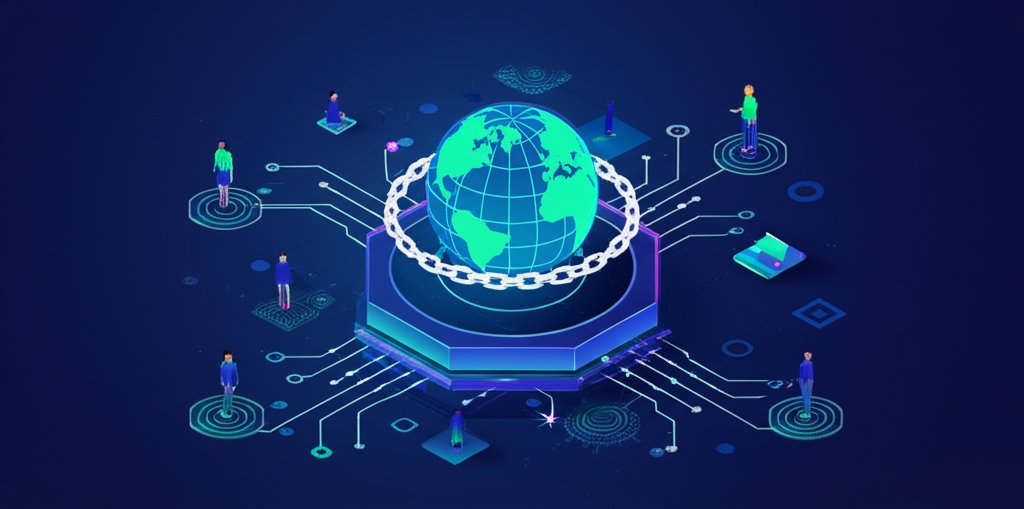
Imagine a global digital ledger, accessible to everyone, where every transaction, every record, is transparent, unchangeable, and doesn't answer to any single company or government. That's the revolutionary promise of a public blockchain, a technology that empowers individuals and redefines how we interact with digital systems, allowing anyone to participate in open digital networks, read data, and write information without asking for permission.
This isn't some futuristic fantasy; it's the underlying infrastructure for phenomena like Bitcoin and Ethereum, fostering a new era of decentralized applications and digital ownership. It’s a paradigm shift from centralized control to community-driven integrity, built on a framework of open-source code and cryptographic security.
At a Glance: What Public Blockchains Offer You
- Open Access: Anyone can join the network, verify transactions, or contribute to its operation.
- Unrivaled Transparency: All transactions are visible and auditable by anyone, fostering trust through openness.
- Ironclad Security: Cryptographic principles make data tamper-proof and incredibly difficult to alter once recorded.
- No Central Authority: Decisions and operations are decentralized, preventing single points of failure or censorship.
- Empowering Participation: You don't need permission from a bank or government to send value or use applications.
What Exactly Is a Public Blockchain?
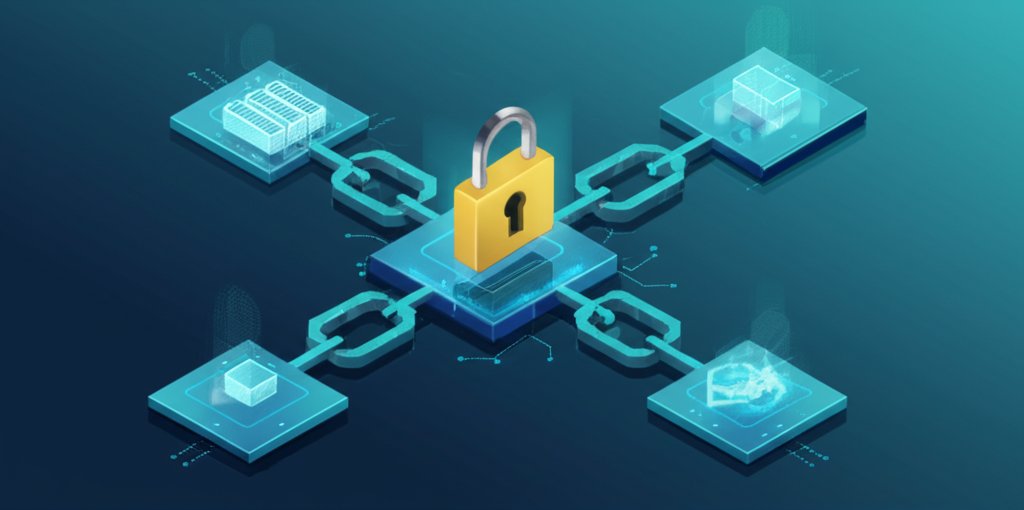
At its heart, a public blockchain is a decentralized digital network where all participants can read, write, and validate data without needing permission from a central authority. Think of it as a shared, immutable database—a continuously growing list of records, called blocks, linked together using cryptography. Each block contains a timestamp and transaction data, forming a secure chain.
This groundbreaking model was first proposed by the enigmatic Satoshi Nakamoto in 2009 with the creation of Bitcoin, aiming to create a peer-to-peer electronic cash system free from intermediaries. Since then, the concept has evolved dramatically, powering a vast ecosystem of digital assets, applications, and innovative financial systems.
Unlike traditional databases that are controlled by a single entity (like a bank or a social media company), a public blockchain operates on an open-source framework, ensuring its inner workings are transparent for all to see. This transparency, combined with advanced cryptographic principles, forms the bedrock of its security and integrity, enabling truly "trustless" interactions between users. You don't need to trust an intermediary; you trust the network's mathematical rules.
The Core Principles That Make It Work
To truly appreciate the power of public blockchains, it's essential to understand the foundational principles that define them. These aren't just technical specifications; they're philosophical pillars that enable a new kind of digital interaction.
Decentralization: No Single Point of Control
Imagine a system where no single entity—no company, no government, no individual—holds absolute power. That's the essence of decentralization in a public blockchain. Instead of storing all data on a central server, copies of the blockchain are distributed across thousands of computers (called "nodes") worldwide.
This distribution means there's no central point of failure that can be targeted, censored, or corrupted. If one node goes offline, thousands of others continue to operate, ensuring the network's resilience and uptime. Decisions about the network's future are often made through community consensus, further solidifying its decentralized nature.
Transparency: An Open Book for All
Every single transaction that has ever occurred on a public blockchain is recorded and visible to anyone on the network. While users often operate under pseudonyms (cryptographic addresses rather than real-world identities), the flow of value and data is completely transparent.
This "open book" approach means that anyone can audit the ledger, verify transactions, and ensure the network is operating as intended. This level of transparency fosters accountability and drastically reduces the potential for fraud or hidden manipulations, as every action leaves an undeniable digital trail.
Immutability: Once Written, Never Changed
One of the most powerful features of a public blockchain is the immutability of its records. Once a transaction is validated and added to a block, and that block is added to the chain, it's virtually impossible to alter or delete it. This is thanks to the cryptographic links between blocks; changing one block would require re-doing the complex computational work for every subsequent block in the chain, a feat that is astronomically difficult and expensive.
This characteristic makes public blockchains ideal for creating secure, permanent records of ownership, transactions, and data, offering a level of integrity that traditional record-keeping systems can't match.
Open Participation: Anyone Can Join
Public blockchains are inherently permissionless. This means anyone, anywhere in the world, can participate in the network. You don't need to apply for an account, provide identification, or gain approval from an authority. You can download the software, set up a node, send transactions, or develop applications.
This open access removes gatekeepers, democratizing access to financial services and digital networks. It empowers individuals by giving them direct control over their digital assets and identity, without relying on intermediaries.
Consensus Mechanisms: Agreement Without Trust
How do thousands of independent nodes agree on the correct state of the ledger without a central authority? This is where consensus mechanisms come in. These algorithms are the rules by which the network achieves agreement. The most well-known examples are:
- Proof of Work (PoW): Used by Bitcoin, this mechanism requires "miners" to expend computational energy to solve complex mathematical puzzles. The first to solve it gets to add the next block to the chain and receives a reward. This high energy cost makes it incredibly difficult for malicious actors to dominate the network.
- Proof of Stake (PoS): Adopted by Ethereum 2.0 and others, PoS requires participants (validators) to "stake" a certain amount of the network's native cryptocurrency as collateral. Validators are then randomly selected to create new blocks, with their chances proportional to the amount they've staked. Malicious behavior can result in losing their staked assets, incentivizing honest participation.
These mechanisms ensure the integrity of the network, prevent double-spending (spending the same digital asset twice), and maintain a consistent, agreed-upon version of the blockchain across all nodes.
Under the Hood: How Transactions Come to Life
Understanding the workflow of a public blockchain helps demystify how this distributed system maintains order and security. It's a precise choreography of digital signals and cryptographic checks.
- Initiating a Transaction: It all starts when a user decides to send cryptocurrency, interact with a smart contract, or perform any action that requires a record on the blockchain. This transaction is cryptographically signed by the user using their private key.
- Broadcasting to the Network: The signed transaction is then broadcast to nearby nodes across the network. These nodes, in turn, relay the transaction to other nodes, ensuring it quickly propagates throughout the entire system.
- Validation by Nodes: Once a node receives a transaction, it performs a series of checks. It verifies the digital signature, ensures the sender has sufficient funds (or authority), and checks for any signs of double-spending (an attempt to spend the same funds twice). This happens simultaneously across many nodes.
- Grouping into a Block: Valid transactions are temporarily held in a "mempool" (memory pool) by nodes. "Miners" (in PoW networks) or "validators" (in PoS networks) then gather a selection of these unconfirmed transactions and bundle them together into a candidate block.
- Achieving Consensus: The node that successfully validates this new block according to the network's consensus mechanism (e.g., solving the PoW puzzle, or being chosen as the PoS validator) broadcasts this newly formed block to the rest of the network.
- Adding to the Chain: Other nodes verify the legitimacy of this new block and, once confirmed, add it to their local copy of the blockchain. This links the new block cryptographically to the previous one, creating a permanent, immutable record.
- Incentives and Synchronization: The node that successfully added the block is rewarded with newly minted cryptocurrency (e.g., Bitcoin or Ethereum) and often a portion of the transaction fees. All other nodes then synchronize their copies of the blockchain to include this latest block, maintaining a consistent, up-to-date ledger across the entire network.
This continuous process, repeated every few seconds or minutes depending on the network, ensures that the blockchain grows steadily, securing new transactions and maintaining its integrity without any central oversight.
Why Public Blockchains Matter: Key Advantages
The foundational principles of public blockchains translate into compelling benefits that are disrupting various industries and empowering individuals globally.
Reduced Corruption and Single Points of Failure
By eliminating central authorities and distributing control across a vast network, public blockchains inherently reduce the risk of corruption, censorship, and single points of failure. No single entity can unilaterally change the rules, reverse transactions, or seize assets. This resilience makes them incredibly robust against attacks or system failures.
Enhanced Accountability Through Transparency
With every transaction publicly viewable on the ledger, there's an unprecedented level of accountability. While identities are often pseudonymous, the movement of assets and data is auditable by anyone. This transparency can be transformative in areas like supply chain tracking, charitable donations, or governmental spending, making it harder for illicit activities to go unnoticed.
Unparalleled Security and Data Integrity
The combination of cryptographic hashing, immutable records, and distributed consensus makes public blockchains incredibly secure. Tampering with data on the chain would require an immense amount of computational power, far beyond the reach of most attackers. This ensures that records, once established, are trustworthy and reliable.
Accessibility and Financial Inclusion
Public blockchains are permissionless, meaning anyone with an internet connection can access and utilize them, regardless of their nationality, socioeconomic status, or banking history. This is particularly impactful for the unbanked or underbanked populations worldwide, offering them access to financial services, savings, and peer-to-peer transactions without relying on traditional institutions.
User Empowerment and Sovereignty
Ultimately, public blockchains shift power from institutions back to individuals. Users have direct control over their digital assets through their cryptographic keys. This self-custody eliminates the need to trust intermediaries with your funds, giving you true ownership and sovereignty in the digital realm.
Real-World Impact: Diverse Use Cases
From transforming finance to redefining ownership, public blockchains are proving their versatility across a multitude of applications.
- Cryptocurrency Transactions: The most obvious use case, public blockchains like Bitcoin enable secure, peer-to-peer digital cash transactions without intermediaries, allowing for faster and often cheaper international transfers.
- Decentralized Finance (DeFi): Public blockchains are the backbone of DeFi, recreating traditional financial services like lending, borrowing, trading, and insurance using smart contracts and decentralized applications (DApps). These services are permissionless, transparent, and operate 24/7 without traditional banks.
- Non-Fungible Tokens (NFTs): NFTs use public blockchains, primarily Ethereum, to prove ownership of unique digital assets like art, music, collectibles, and even virtual land. This creates verifiable scarcity and a clear chain of custody for digital items.
- Supply Chain Management: By recording every step of a product's journey on an immutable public ledger, businesses can achieve unparalleled transparency and traceability. This helps verify authenticity, track provenance, and improve efficiency from source to consumer.
- Secure Voting Systems: Public blockchains could offer a more secure, transparent, and auditable voting system, reducing the potential for fraud and increasing public trust in election results. Each vote could be recorded as an immutable transaction.
- Decentralized Identity Verification: Users can control their digital identities, selectively revealing necessary information without exposing everything. This allows for self-sovereign identity, where individuals own and manage their personal data without relying on central databases prone to breaches.
- Gaming and Metaverse: Public blockchains enable true ownership of in-game assets, allowing players to buy, sell, and trade unique items (often as NFTs) across different games and platforms, paving the way for open, interconnected metaverses.
Popular Public Blockchains You Should Know
The public blockchain landscape is diverse, with each network offering unique features and optimizations. Here are some of the most prominent examples:
- Bitcoin (BTC): The original public blockchain, Bitcoin remains the largest cryptocurrency by market capitalization. Primarily designed as a peer-to-peer electronic cash system, it's known for its robust security (using Proof of Work) and scarcity.
- Ethereum (ETH): Far more than just a cryptocurrency, Ethereum is a decentralized platform that introduced "smart contracts"—self-executing agreements with the terms directly written into code. It's the foundational layer for countless DApps, DeFi protocols, and NFTs. Ethereum recently transitioned from Proof of Work to Proof of Stake (Ethereum 2.0).
- Cardano (ADA): Known for its research-driven, peer-reviewed approach, Cardano aims to provide a highly secure and scalable platform for DApps and smart contracts. It utilizes a Proof of Stake consensus mechanism called Ouroboros.
- Solana (SOL): Solana distinguishes itself with high transaction throughput and low fees, making it popular for DApps that require speed and efficiency. It achieves this through a unique hybrid consensus mechanism that includes Proof of History (PoH) alongside Proof of Stake.
- Polkadot (DOT): Polkadot is designed to enable different blockchains to connect and communicate with each other. It's a "multi-chain" network that facilitates interoperability between various specialized blockchains (parachains), aiming for a truly decentralized web.
- Binance Smart Chain (BSC) / BNB Chain: A popular choice for DeFi applications due to its relatively low transaction costs and fast processing speeds. While it has elements of decentralization, it's often viewed as more centralized than Ethereum due to its validator set, making it a distinct flavor among public blockchains.
- Litecoin (LTC): Often called the "silver to Bitcoin's gold," Litecoin was created with the goal of faster transaction confirmations and a different hashing algorithm (Scrypt) than Bitcoin. It's also a Proof of Work public blockchain.
Each of these public blockchains offers a distinct approach to achieving decentralization, security, and scalability, contributing to the rich and evolving digital ecosystem.
Navigating the Challenges and Limitations
While the advantages of public blockchains are compelling, it's crucial to acknowledge the hurdles and inherent limitations they face. No technology is without its trade-offs.
Scalability Issues
Perhaps the most significant challenge for many public blockchains is scalability. As transaction volume increases and more users join the network, the speed of transactions can slow down, and fees can rise significantly. Networks like Bitcoin and Ethereum (prior to Ethereum 2.0) have historically struggled to process transactions as quickly as centralized payment systems. Solutions like sharding, layer-2 networks (e.g., Lightning Network, Polygon), and different consensus mechanisms are being developed to address this.
High Energy Consumption (for PoW)
Proof of Work (PoW) blockchains, like Bitcoin, require immense amounts of computational power, leading to substantial energy consumption. While proponents argue this energy use is justified by the security it provides, critics point to its environmental impact. The shift to Proof of Stake (PoS) by networks like Ethereum is a direct response to this concern, drastically reducing energy consumption.
Privacy Concerns
Despite often using pseudonymous addresses, all transactions on a public blockchain are, by definition, public and traceable. While your real-world identity isn't directly linked to your blockchain address, patterns of spending and interaction can sometimes be analyzed to infer identity. This presents privacy risks for individuals and makes pure public blockchains often less suitable for enterprises that require strict confidentiality for their transactions.
Regulatory Uncertainty
The decentralized and global nature of public blockchains means they often fall into a regulatory gray area. Governments worldwide are still grappling with how to classify and regulate cryptocurrencies and blockchain-based applications. This uncertainty can create legal challenges, hinder mainstream adoption, and make it difficult for businesses to build compliant solutions.
Vulnerability to 51% Attacks
In theory, a public blockchain, especially a PoW network, could be vulnerable to a "51% attack." This occurs if a single entity or group gains control of more than 50% of the network's total computing power (hash rate). With this dominance, they could potentially manipulate transaction ordering, prevent new transactions from being confirmed, or even reverse previous transactions (though reversing very old transactions becomes exponentially harder). Such attacks are extremely costly and difficult to execute on large, well-established networks like Bitcoin but remain a theoretical risk for smaller chains.
Enterprise Suitability
Due to their public, permissionless, and often pseudonymous nature, public blockchains are frequently less suitable for enterprise solutions that demand strict privacy, regulatory compliance, and often, faster, more predictable transaction finality. For these specific business needs, other blockchain architectures, such as permissioned or private blockchain explained, often provide a more fitting solution, allowing companies to control who can participate and view data.
Public vs. Private Blockchains: A Quick Distinction
The world of blockchain extends beyond just public networks. While public blockchains are open to everyone, private blockchains are essentially the opposite. They are permissioned networks where participants must be invited and validated. This often means they have a central authority controlling access and typically offer higher transaction speeds and privacy. They operate more like a traditional intranet compared to the internet-like nature of public blockchains. Understanding this distinction is key to choosing the right blockchain solution for different needs.
Addressing Common Questions
Public blockchains introduce many new concepts. Let's tackle some frequently asked questions.
Are Public Blockchains Truly Anonymous?
No, not truly. While transactions use pseudonymous addresses rather than your real name, they are all publicly visible on the blockchain. Advanced analytics can sometimes link patterns of transactions to real-world identities, especially when interacting with centralized exchanges or services that require KYC (Know Your Customer) information. It's more about "pseudonymity" than complete anonymity.
How Secure Are Public Blockchains?
They are exceptionally secure due to cryptographic principles and decentralized consensus. Altering past transactions would require an impossible amount of computing power to rewrite the entire chain. However, user security is paramount; if you lose your private key, you lose access to your funds, and if your wallet is compromised, your assets can be stolen. The network itself is secure, but individual user practices also play a huge role.
Can Public Blockchains Be Hacked?
The underlying blockchain protocol itself is extremely resistant to direct hacking due to decentralization and cryptographic security. Most "hacks" reported in the crypto space involve weaknesses in associated services (like centralized exchanges), smart contract vulnerabilities (bugs in the code), or user errors (e.g., private key compromise), rather than a fundamental breach of the public blockchain's core integrity.
What is the Difference Between Blockchain and Cryptocurrency?
Blockchain is the underlying technology—the distributed, immutable ledger system. Cryptocurrency (like Bitcoin or Ethereum) is a digital asset or token that often runs on a blockchain. It serves various purposes, including being a medium of exchange, a store of value, or a utility token to pay for network services (e.g., transaction fees). A blockchain can exist without a specific cryptocurrency, but most public blockchains use one as an incentive and a means of value transfer.
Is All Blockchain Public?
No. There are several types of blockchain. Public blockchains are permissionless and open to all. Private blockchains are permissioned and restricted to known participants. There are also consortium blockchains, which are permissioned but governed by a group of organizations rather than a single entity. The choice depends entirely on the specific application's requirements for privacy, control, and decentralization.
The Road Ahead: What's Next for Public Blockchains
Public blockchains are not static; they are rapidly evolving, driven by ongoing research and development aimed at overcoming current limitations and unlocking new possibilities.
We're seeing significant progress in scalability solutions, with Layer 2 networks maturing and new consensus mechanisms being explored. The push for greater energy efficiency, particularly with the widespread adoption of Proof of Stake, addresses a major environmental concern. Regulatory clarity, though slow, is gradually emerging in various jurisdictions, which could pave the way for broader institutional and mainstream adoption.
As the technology matures, expect to see even more sophisticated applications emerge, from decentralized social media platforms that truly give users control over their data, to advanced interoperability solutions that allow different blockchains to seamlessly communicate. Public blockchains are building the foundation for a truly open, interconnected, and permissionless digital future.
If you're looking to participate, start by researching projects that align with your interests, whether it's trading cryptocurrencies, exploring DeFi, collecting NFTs, or even learning to build decentralized applications. The barrier to entry is low, but the potential for innovation and participation is immense. Your journey into open digital networks begins here.